
Meteora history from hermit cells to summit monasteries
Meteora history begins with a different relationship to the rocks from the one visitors experience on the road today. Hermits probably settled here from the 11th century, while systematic monastery building on the summits developed in the 14th century. These stages help explain the contrast between small cells in the cliffs and substantial religious complexes above them. A cultural visit makes more sense when the landscape and the buildings are read together.
The setting is Thessaly, in the regional area of Trikala. Kalambaka lies below the monastery rocks, while Kastraki sits among the western formations. Start with the six active monasteries to choose the houses you want to enter, then use this chronology to understand what you see. A panorama, a church interior and a hermit viewpoint each reveal a different part of the story.
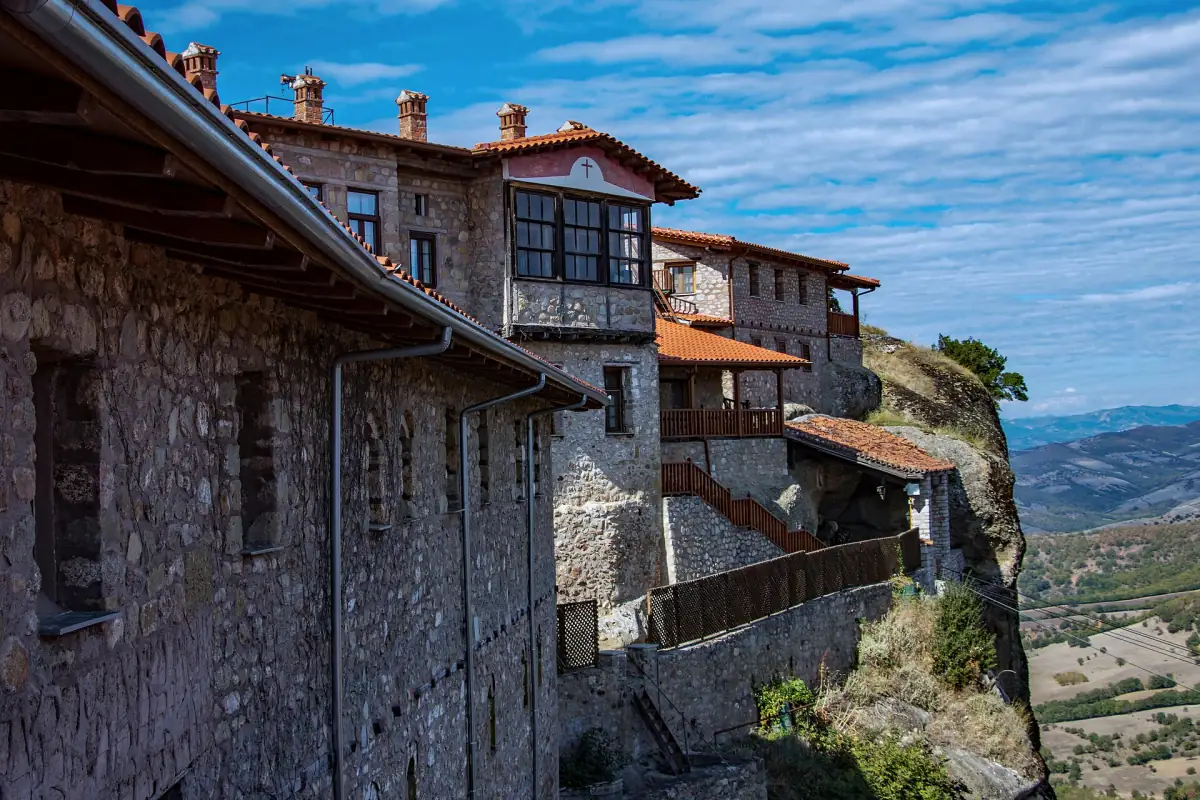
Meteora tours: History
Choose the church and hermit caves for religious heritage, or a minibus tour for monastery views with a local guide.
Hand-picked tours, booked through Viator. Prices are indicative starting prices in euros (as of October 2026). Tap a tour for live availability and the current price in your currency.
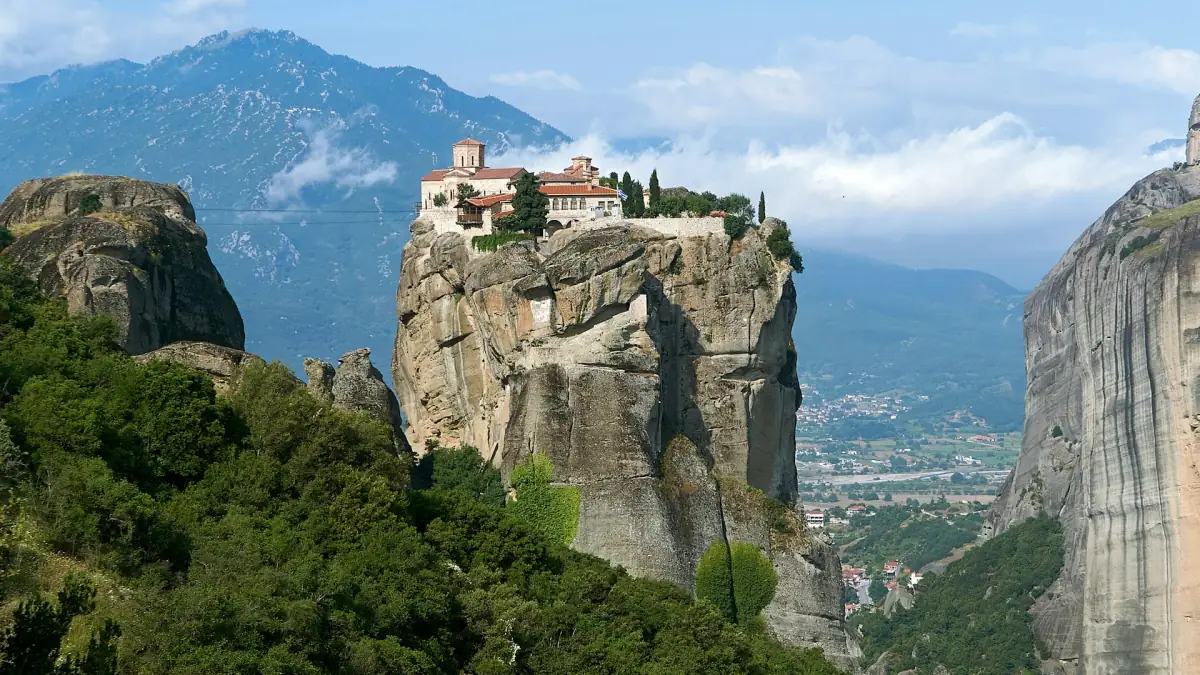
Meteora minibus and local guide
- Free audio guides
- Free Wi-Fi in the bus
- Transfer with a luxury VIP minibus
An English-speaking local guide accompanies the tour.
Check availability →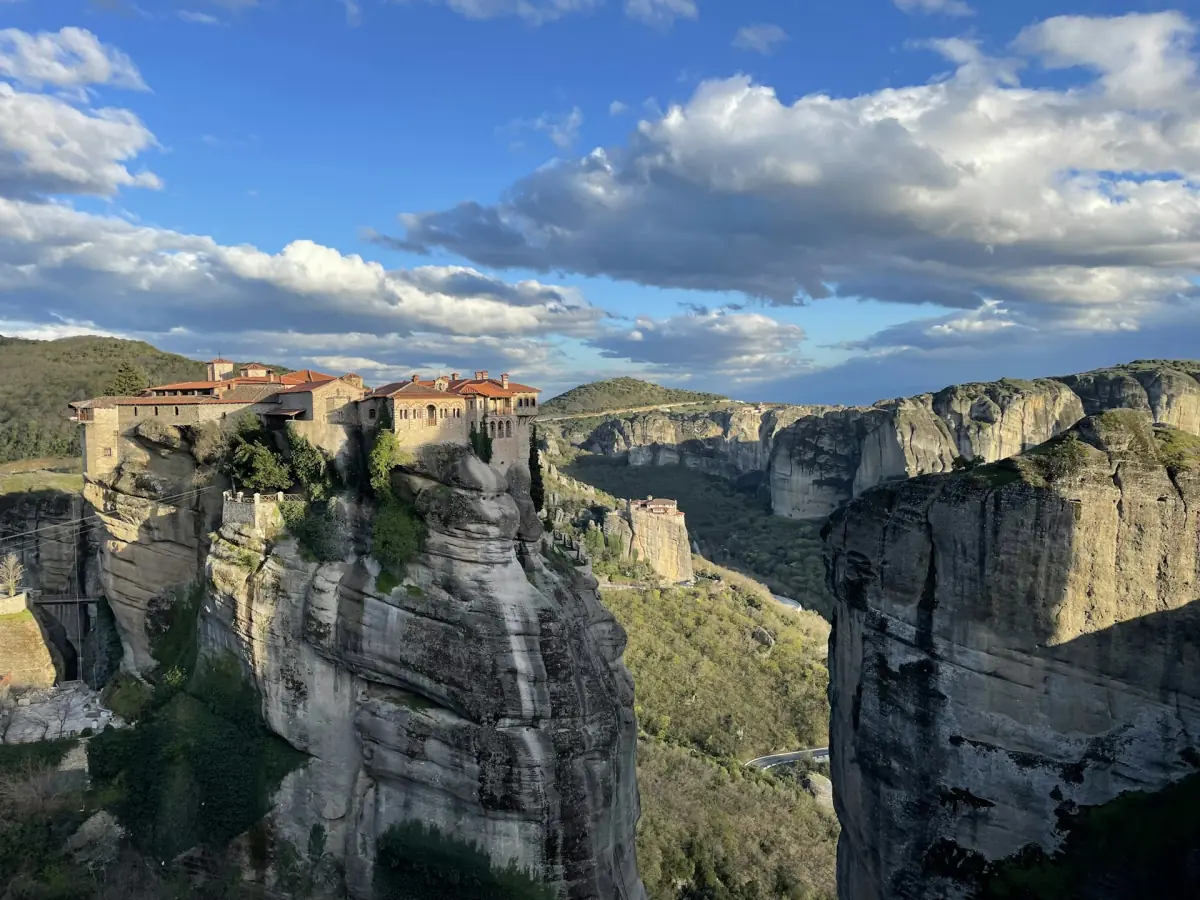
Church, monastery and hermit caves
- Audio guide
- Hotel pickup and drop-off to/from Kalambaka or Kastraki
- Bottled water
Visit inside the Byzantine Church of Virgin Mary and Saint Stephen monastery, as well as hidden hermit caves.
Check availability →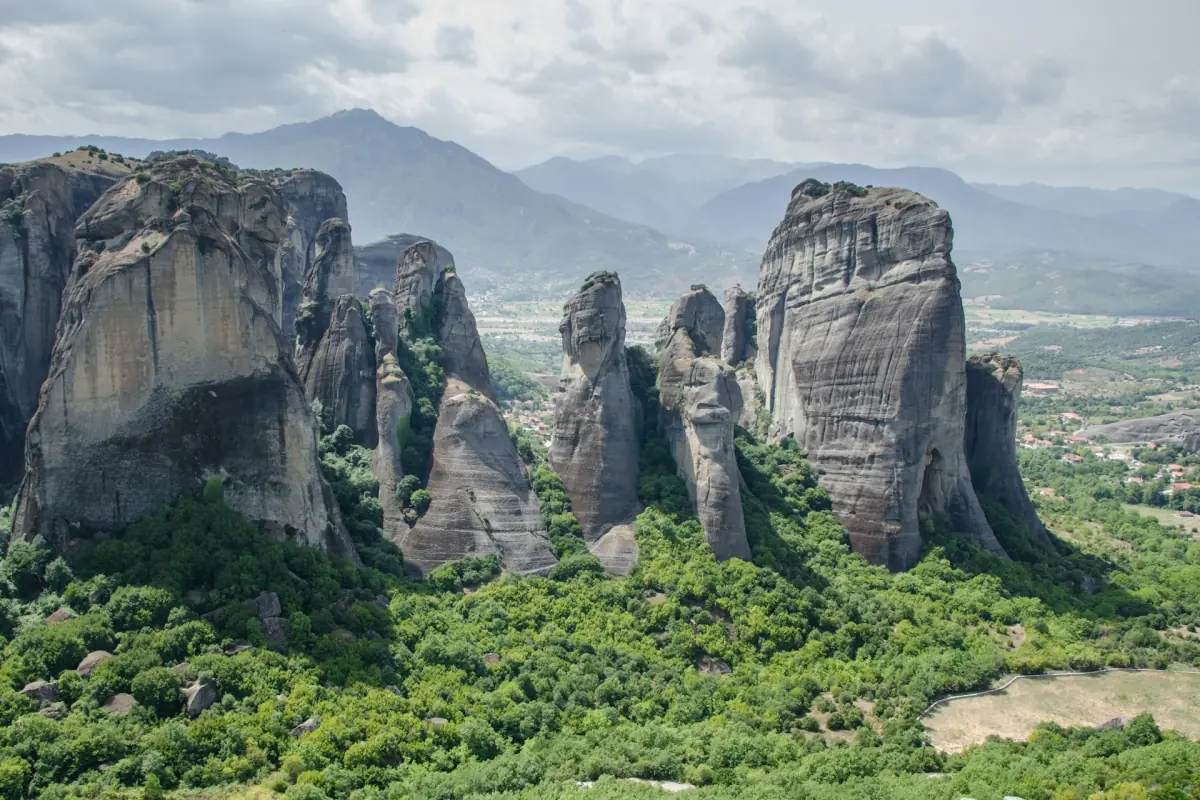
Monasteries and viewpoints by minibus
- Best Stops for Panoramic views and photos
- Transport by luxury air-conditioned mini-bus
- Free wi-fi
A local tour leader accompanies the trip to see all six monasteries, with visits inside three.
Check availability →Cultural visits and monastery tours
Choose a morning minibus outing or a visit combining the Byzantine church, St Stephen and the hermit caves; local transport and inclusions differ.
Ancient history versus monastic history
The ancient past of the area and the medieval monastery story belong to different periods. Kalambaka is associated with the historical name Aiginion in Hellenistic and Roman times. The summit monasteries, however, are not ancient Greek sanctuaries. Their religious buildings and painted interiors are approached through Byzantine and post-Byzantine history. Keeping that distinction in mind avoids treating every old structure in the region as part of the same civilisation.
By the end of the 15th century there were 24 monasteries. That historical figure describes a period of expansion, rather than the number of houses to put on a modern itinerary. Today the practical visiting framework is six active monasteries. Allowing time for one interior and its setting can be more useful than chasing every exterior without understanding how the community used the limited summit space.
Frescoes and buildings shaped by the rocks
The post-Byzantine frescoes of the 16th century form part of Meteora’s World Heritage importance. Theophanes the Cretan painted Agios Nikolaos Anapafsas in 1527. Its layered building arrangement on a narrow rock is also a reminder that the shape of each summit influenced construction. Look at the relationship between stairs, rooms and church before concentrating on individual painted scenes.
Rousanou offers another example of architecture adapted to restricted space, with a small cross-shaped domed main church. Its fresco inscription dates completion to November 1560. At Varlaam, the winding tower and former refectory add a practical dimension to the religious architecture. Access to the Three Hierarchs chapel requires the monks’ permission. Inside any house, follow the photography signs and leave room for worshippers rather than treating the church as a photo backdrop.
Choose a cultural outing with the right emphasis
The four-hour morning sightseeing outing includes a local English-speaking guide, minibus transport and hotel collection in Kalambaka or Kastraki, together with audio guides in several languages. It suits visitors who want the journey between the rocks organised. The panoramic morning small-group alternative also includes local tour leadership and hotel transfers; its itinerary describes seeing the six houses and entering three, with the day’s openings shaping the visit.
For a connection between the town and the summit communities, the four-hour outing with the Byzantine church and St Stephen includes entry visits to those buildings, a hermit-cave stop, bottled water and hotel collection in Kalambaka or Kastraki. These are cultural and monastery visits with their own listed services. A local tour leader accompanying the journey is a different service from a licensed guide interpreting an interior. Choose according to the buildings you want to see and the kind of explanation included.
Kalambaka and a living World Heritage landscape
The Church of the Dormition of the Virgin in Kalambaka brings the chronology down into the town. The middle-Byzantine basilica stands on an older early-Christian building and contains a distinctive marble ambo. Its painting includes work from the 12th century and decoration dated 1573. A church visit therefore adds another layer to a day otherwise focused on summit views.
Meteora entered the World Heritage List in 1988 for cultural and natural values. The monasteries remain religious communities, so build the day around their visiting arrangements and dress requirements. For a route between viewpoints rather than more interiors, see guided walks and monastery trails. If transport and the overall choice of formats matter most, the tour comparison helps connect the historical interest with a workable visit.
Frequently asked questions
When did monastic life begin at Meteora?
Hermit settlement probably began in the 11th century, followed by systematic summit monastery construction in the 14th century.
Are these specialist historian tours?
The options here are cultural and monastery visits with the listed local guidance or audio services. Licensed interior guiding is a separate service to consider.
Can a cultural visit include Kalambaka’s Byzantine church?
The outing combining the Virgin Mary church, St Stephen and hermit caves includes visits inside the church and monastery, plus hotel collection in Kalambaka or Kastraki.