
Where to stay in Meteora for your itinerary
Choosing where to stay in Meteora is mainly a decision between Kalambaka and Kastraki. Kalambaka sits below the monastery rocks at the edge of the Thessalian plain and acts as the transport hub. Kastraki occupies the western part of the area, with houses and lanes among the formations. Both can support a monastery visit, but they place different parts of your journey close at hand.
Begin with your arrival and departure rather than the view from the room. If you arrive by public transport, locate the stop, accommodation address and next meeting point together. If you drive, consider the approach to the property and the onward road circuit. The Meteora transport guide separates the long-distance journey from travel between the monasteries.
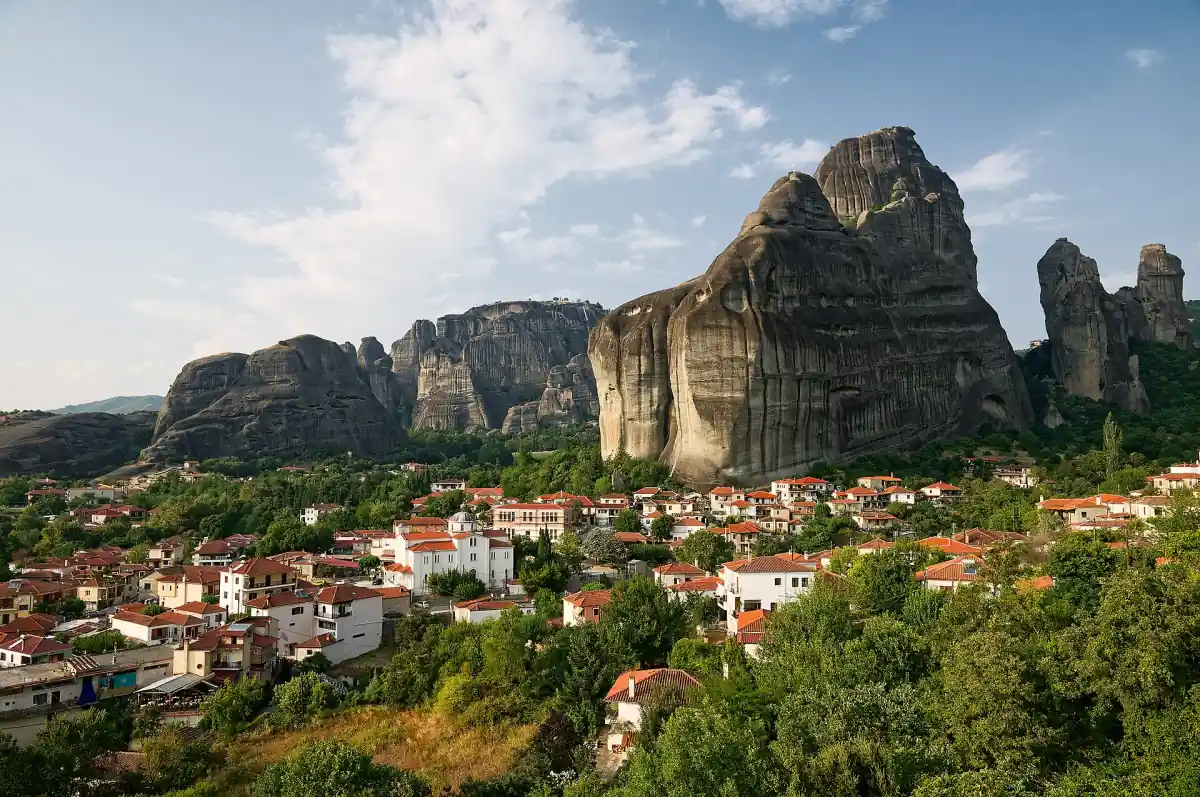
Kalambaka for arrivals and a town-based stay
Kalambaka is the practical starting point when the journey itself determines your schedule. Bus and rail-related services use the town, and some local tours meet at its station. Match the actual address to your accommodation rather than assuming every property has the same short walk to transport. After a long journey, that final stretch matters as much as the location shown on a broad map.
The town also has a historical identity beyond being a base for the rocks. Its old settlement and the Koimisis basilica provide a different setting from the summit monasteries. The basilica has a distinctive marble ambo and layers of Byzantine history. See the Kalambaka guide for that local context, and leave time for the town if you want more than a transfer stop.
Meteora tours: Where To Stay
This two-day package includes a three-star hotel and breakfast.
Hand-picked tours, booked through GetYourGuide. Prices are indicative starting prices in euros (as of October 2026). Tap a tour for live availability and the current price in your currency.
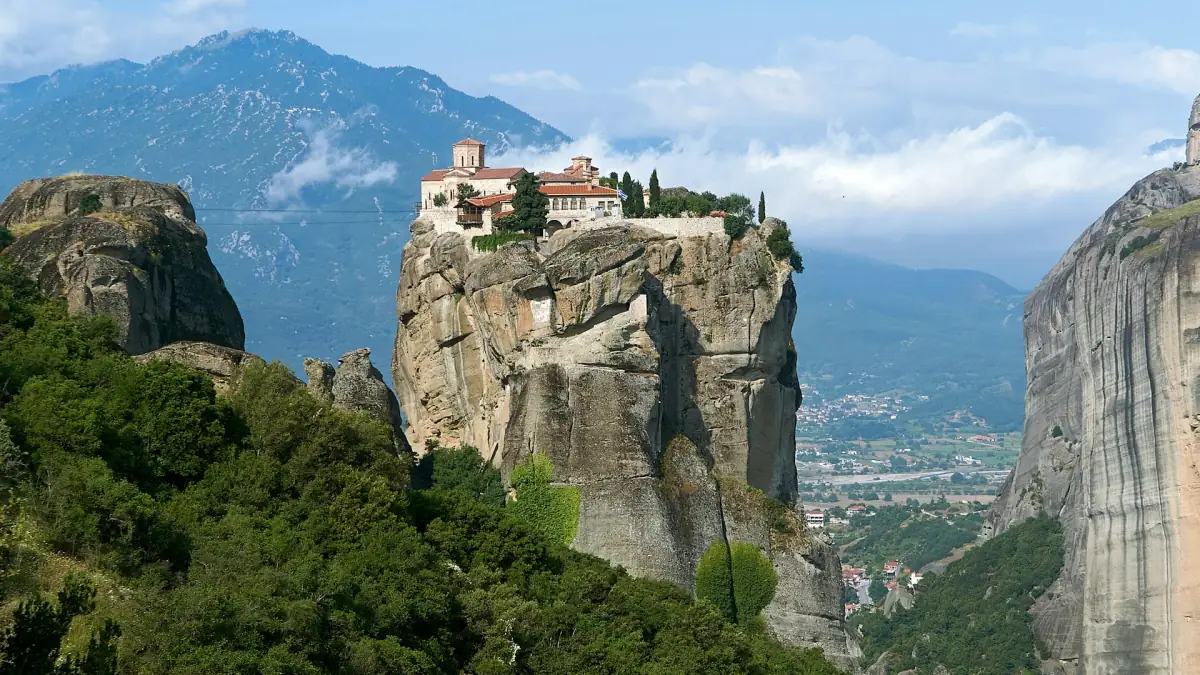
A stay with transport and breakfast
The Athens overnight package combines a three-star hotel and breakfast with local sightseeing and a rail-labelled return journey.
An overnight tour as an alternative
If you prefer to choose transport and accommodation together, the overnight trip sold as a train package includes a three-star hotel, breakfast, return travel from Athens with train tickets, local tour guidance, photo stops and water. Build the journey around the actual operating arrangements: the published rail approach includes a replacement bus between Paleofarsalos and Kalambaka. Obtain the full dated itinerary for the package.
Monastery admissions, the Byzantine church entrance, accommodation tax, lunch and dinner are extra for this product. Athens hotel pickup and a guide inside the monasteries are excluded. It is a way to combine an overnight stay with sightseeing rather than a directory of individual hotels. For a wider itinerary comparison, read the two-day journeys from Athens.
Kastraki for the western rock landscape
Kastraki places the setting itself at the centre of your stay. The village lies immediately below and among western rock formations, with a higher old settlement and small lanes. That location suits a visit in which walking and the landscape matter alongside monastery interiors. Choose the actual address in relation to your planned trail start or pickup point; proximity to rocks alone does not settle the route.
A scenic base still needs a plan for luggage, the evening return and the final departure. If your excursion starts in Kalambaka, include that link in the morning schedule. If a tour offers accommodation pickup, use the pickup arrangements for that particular product. Avoid treating an attractive village location as a substitute for checking how your day begins and ends.
Match your base to stairs and road access
Sleeping below the rocks does not remove the physical demands above them. Parking areas, paths and stairways add effort to a monastery visit, especially in heat. Great Meteoron and Holy Trinity involve more substantial approaches. St Stephen is comparatively easier to approach across a short fixed bridge, though this should not be read as complete wheelchair access throughout the complex.
Choose fewer stops if repeated climbs would dominate your day. The monastery guide explains the differences between houses, while the walking guide helps distinguish a trail outing from a driving circuit. Bring suitable monastery clothing, water and firm footwear whichever base you choose. A private vehicle or tour transfer covers road travel, leaving the final entrance approach to consider.
One evening and a second morning
An overnight stay can divide the visit into separate experiences: an evening view of the rocks and a morning chosen around monastery opening days. Keep interior visits within their opening windows and treat sunset as its own activity. Tour starts change with the season, and the view depends on weather. Leave a sensible return plan after an evening outing rather than attaching a late walk to an already demanding day.
For an independent stay, set one main priority for each part of the visit. Choose monastery interiors for one period and a walk or town visit for another. If time is tight, a focused day visit remains an option; an overnight stay is useful extra time rather than a requirement. Compare the seasonal planning advice before deciding how much daylight and walking to build into your stay.
Questions about your visit
Which base suits public transport?
Kalambaka is the transport hub. Compare the exact accommodation address with your arrival stop and tour meeting point.
Why choose Kastraki?
Its village setting lies among the western rocks, making the landscape a central part of the stay.
Must I stay overnight?
A day visit is possible. An overnight stay allows more room for evening views and another morning.